 BP-20 · Industry Blueprint · Utilities: Renewables
Renewable generation depends on connected systems. Not all need to stay open.
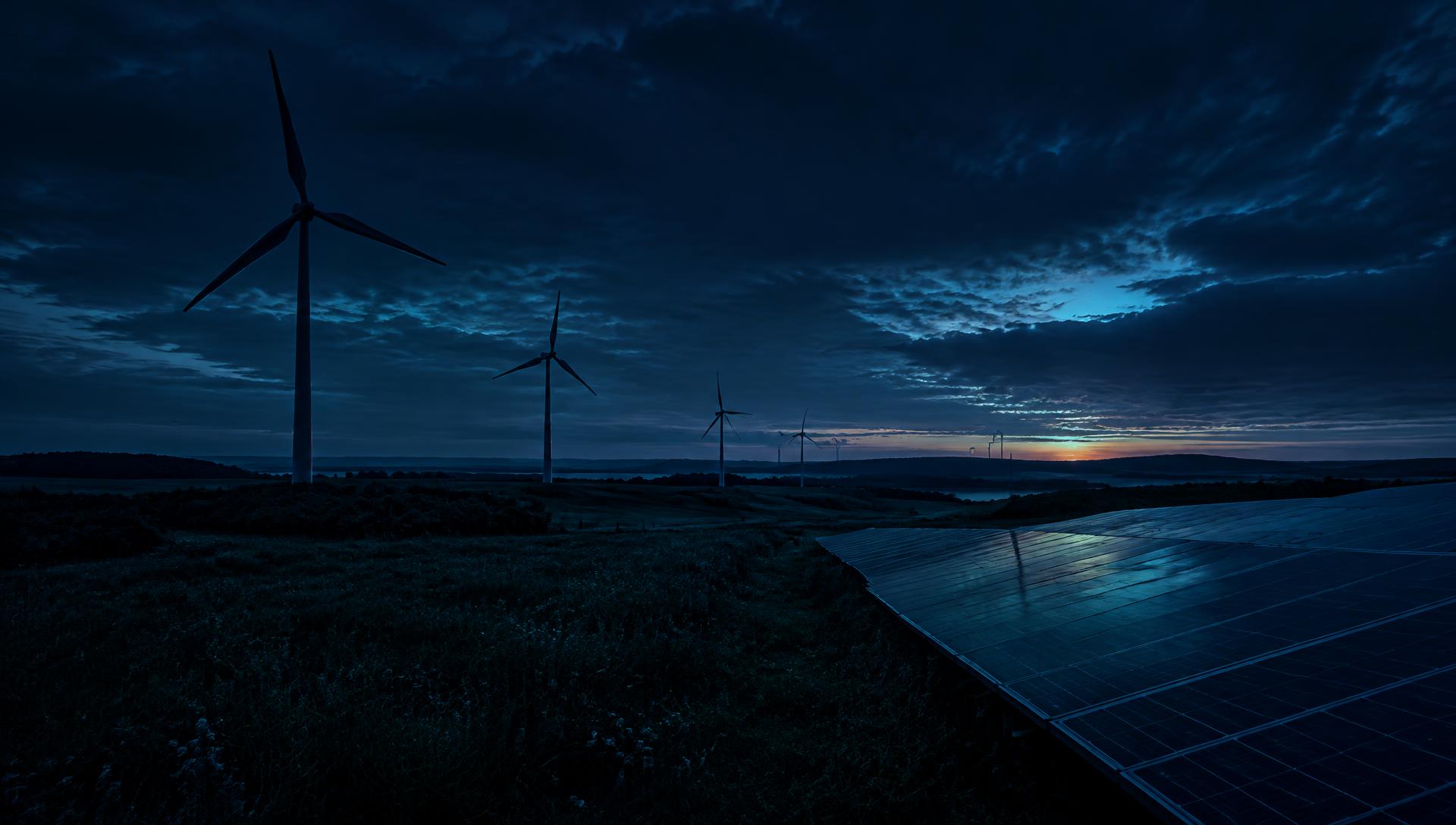
Wind, solar and battery sites connect field equipment to site operations, fleet centres and equipment suppliers. Control may add physical boundaries to selected paths while preserving safety, grid and generation requirements.
- An OEM needs a renewable-site engineering session while the fleet owner reviews control, telemetry and battery-system dependencies. Review the named support and cross-zone boundaries; operationally required links are not assumed disconnectable.
- Reference design for adaptation with the service owner, not a validated deployment. Confirm complete boundary coverage, operational dependencies and the consequences of opening or closing each selected path.
- 3 matching Control Plans. Offline Secure Storage® is separate.
- It does not replace site control engineering, grid obligations, safety systems, OEM procedures or incident response. Changing connectivity does not establish a safe process state, stop local execution or guarantee service restoration.
The industry reality
Utilities: Renewables: the connections your operation relies on.
Remote OEM access, fleet operations and site control may intersect across turbines, inverters and battery management systems. A change to communications may affect monitoring, maintenance, dispatch or safety functions.
What needs protecting
The service, systems and people behind the connections.
An OEM needs a renewable-site engineering session while the fleet owner reviews control, telemetry and battery-system dependencies. Review the named support and cross-zone boundaries; operationally required links are not assumed disconnectable.
Threats and failure scenarios
Situations to plan for, before the next incident.
An OEM needs a renewable-site engineering session while the fleet owner reviews control, telemetry and battery-system dependencies. Control acts on selected physical connections, not every connection in the environment.
Industry architecture
Illustrative sector connections.
An OEM needs a renewable-site engineering session while the fleet owner reviews control, telemetry and battery-system dependencies. Review the named support and cross-zone boundaries; operationally required links are not assumed disconnectable.
Illustrative sector connection
Stage
Without Control: the selected routes remain open.
Modules in this Blueprint







Shown when the agreed Control response is selected.
An illustrative ransomware event starts in a connected system and follows the open routes shown here. This is a connection model, not a prediction of a real attack.The open connections allow movement in this simplified model. Actual exposure depends on your environment and existing defences.
Selected connection states
- OEM support to renewable site engineeringAlways connected
- Fleet management to site SCADA administrationAlways connected
- BESS protection to local safety functionsAlways connected
- Site support to renewable fleet centreAlways connected
- Recovery access (OSS)Disconnected
- !Illustrative threat starts at · Corporate IT
- +Modelled movement to · OEM access, Identity
- +Modelled movement to · Approved access, Fleet operations
- +Modelled movement to · Supporting service, Monitoring / dispatch, Site SCADA
- +Modelled movement to · Protected service, Turbines / inverters
This model only shows the selected routes. An interrupted route does not remove an existing compromise or protect unmodelled paths. Your security tools detect the event; the agreed Control design governs the response. Offline Secure Storage® holds copies separately; it is not a Control module.
Recommended industry Blueprint
Our recommended Blueprint for Utilities: Renewables.
An OEM needs a renewable-site engineering session while the fleet owner reviews control, telemetry and battery-system dependencies. Control acts on selected physical connections, not every connection in the environment.
- Start with these connections
- OEM support to renewable site engineering; Fleet management to site SCADA administration
- Agree how access works
- Open only for the authorised support task; close under agreed completion conditions
- Plan the response
- Change only the selected boundary after the service owner approves the impact
Refine this recommendation with renewable fleet operations, site or bess engineering and security leads. Offline Secure Storage® can hold recovery copies separately; it is not a Control module.
As featured in





Operational scenarios
Who decides, what changes, and what is checked.
Agree responsibility and service dependencies before relying on a controlled connection.
- Normal operation
Wind, solar and battery sites connect field equipment to site operations, fleet centres and equipment suppliers. Control may add physical boundaries to selected paths while preserving safety, grid and generation requirements.
- Approved work
An OEM needs a renewable-site engineering session while the fleet owner reviews control, telemetry and battery-system dependencies. The owner authorises the selected route and its closing conditions.
- Incident response
An OEM needs a renewable-site engineering session while the fleet owner reviews control, telemetry and battery-system dependencies. Control acts on selected physical connections, not every connection in the environment.
- Reconnection
The owner reviews service dependencies and security checks, authorises reconnection and verifies the observed result. Evidence is retained only through the specified supporting systems.
It does not replace site control engineering, grid obligations, safety systems, OEM procedures or incident response. Changing connectivity does not establish a safe process state, stop local execution or guarantee service restoration.
Resilience and recovery
Offline Secure Storage®
OSS protects stored business data, recovery copies and retained evidence through physical disconnection. It is a separate storage service, not a Control module or a network containment function.
Control by Firevault governs selected physical connections. Existing detection tools and authorised operators decide when to act. OSS does not detect incidents, command Control or replace operational safety procedures.
Offline Secure Storage (OSS) is separate from Control. If selected, it can hold retained copies of configurations, records or recovery material. Collection, completeness and recovery readiness depend on the supporting tools, retention design and tested recovery procedures.
Explore Offline Secure StorageStandards and governance
Support your obligations. Keep the boundaries clear.
Alignment may be assessed against NIS Regulations 2018 and applicable Grid Code requirements; no certification or compliance outcome is implied. Any assessment needs deployment-specific scope and evidence; this Blueprint provides no certification, complete audit trail or guaranteed response time.
Detection and the decision to act belong to the operational owner and supporting security systems. Identity, approval workflow, session expiry and evidence collection require specified integrations. Execute initiates an approved action; Fracture physically disconnects the selected path through Firebreak hardware. Confirm the observed connection state separately. Anchor keeps critical assets within defined physical connection boundaries; it does not collect or retain records. Transfer governs a designated exchange path, not content inspection or de-identification.
Deployment and proof of concept
Start with one boundary. Test it. Then expand.
Review the first selected connection with renewable fleet operations, site or bess engineering and security leads, agree who can authorise a change and test the service impact.
- Map the complete boundary
Confirm cabling, redundant links and alternate routes. A selected physical cut does not remove paths outside its scope.
- Agree an independent command route
Confirm the available command methods for the selected hardware. Command delivery can be affected by coverage, roaming and handshakes.
- Test the effect, not just the command
Verify the observed link state, service dependencies and failure behaviour in an agreed test window.
Plan your first route
Start with the route you would close first.
Review the first selected connection with renewable fleet operations, site or bess engineering and security leads, agree who can authorise a change and test the service impact.
Outcomes
What changes, and how you will verify it.
Judge the Blueprint on agreed, observed outcomes.
Questions worth asking
Before you rely on BP-20.
Practical questions for the people who own these connections.
Wind, solar and battery sites connect field equipment to site operations, fleet centres and equipment suppliers. Control may add physical boundaries to selected paths while preserving safety, grid and generation requirements.
An OEM needs a renewable-site engineering session while the fleet owner reviews control, telemetry and battery-system dependencies. Review the named support and cross-zone boundaries; operationally required links are not assumed disconnectable.
Not by assumption. Map dependencies and agree the acceptable service impact with the operational owner before selecting a path.
It does not replace site control engineering, grid obligations, safety systems, OEM procedures or incident response. Changing connectivity does not establish a safe process state, stop local execution or guarantee service restoration.
Control by Firevault governs selected physical connections. Existing detection tools and authorised operators decide when to act. OSS does not detect incidents, command Control or replace operational safety procedures.
Review the first selected connection with renewable fleet operations, site or bess engineering and security leads, agree who can authorise a change and test the service impact.
Your next step
Take the next step with utilities: renewables.
Review the first selected connection with renewable fleet operations, site or bess engineering and security leads, agree who can authorise a change and test the service impact.
Book a briefing