
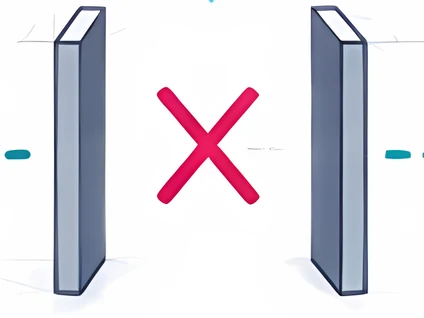
Control PlanCP-04Physical Network Segmentation
Different trust levels need more than a shared network rule.

CP-04 separates selected trust zones with physically controlled crossings, so the connections between them exist only when the agreed design permits them.
- Plan
- CP-04
- Purpose
- Physical Network Segmentation
- Selected connections
- 4
- Modules
- Isolate · Fracture · Relay · Unlink
- Scope
- Selected physical crossings between agreed trust zones, including redundant members of the same boundary.
What is at stake
Why physical network segmentation matters.
Flat or broadly connected networks let a problem in one area reach systems that should have been separate. Firewall rules matter, but some boundaries also need a physical control point.
The problem today
Where you are IP connected today.
CP-04 reviews four IP-connected paths in your business. While a path stays connected over IP, it is a route that can be reached, misused or exploited. Each path below carries its own risk to agree with its owner.
- Risk 1Enterprise to operational zone
The selected crossing between corporate systems and an operational or supervisory zone.
Whenever this path is open over IP, it is a route that can be reached, misused or exploited.
Agreed state: Connected only where required for service
- Risk 2Engineering access crossing
The route used for approved engineering or administrative work.
Whenever this path is open over IP, it is a route that can be reached, misused or exploited.
Agreed state: Disconnected outside approved windows
- Risk 3Approved data exchange crossing
A selected crossing used for scheduled transfers between zones.
Whenever this path is open over IP, it is a route that can be reached, misused or exploited.
Agreed state: Disconnected outside transfer windows
- Risk 4Persistent support dependency
A standing relationship identified as bypassing the agreed boundary.
Whenever this path is open over IP, it is a route that can be reached, misused or exploited.
Agreed state: Removed or controlled after review
Matching industry Blueprints
BP-01 · utilities waterBP-03 · oil and gasBP-05 · aviationBP-06 · telecommunicationsBP-07 · bankingBP-08 · healthcareBP-09 · defenceBP-10 · colocationsBP-11 · maritimeBP-12 · motorsportBP-13 · constructionBP-15 · educationBP-16 · public sectorBP-17 · retailBP-18 · utilitiesWhat Firevault changes
What changes with this Plan.
Define the crossings between trust zones, keep unnecessary crossings withdrawn and remove persistent dependencies that bypass the intended boundary.
| Connection | Agreed normal state | Control action |
|---|---|---|
| Enterprise to operational zone | Connected only where required for service | Isolate defines the boundary. Fracture withdraws the selected crossing. |
| Engineering access crossing | Disconnected outside approved windows | Relay opens the crossing. Fracture withdraws it when the window ends. |
| Approved data exchange crossing | Disconnected outside transfer windows | Relay opens the crossing for the exchange. Fracture withdraws it afterwards. |
| Persistent support dependency | Removed or controlled after review | Unlink removes the dependency. Fracture controls any remaining physical crossing. |
CP-04 does not replace firewall policy, inspect traffic, remove malware or control routes outside the approved register.
Control in Action
Physical Network Segmentation: see the selected path change.
Define the crossings between trust zones, keep unnecessary crossings withdrawn and remove persistent dependencies that bypass the intended boundary.
Control in Action
Stage
Before agreed physical control
Flat or broadly connected networks let a problem in one area reach systems that should have been separate. Firewall rules matter, but some boundaries also need a physical control point.Connected routes require review. Discovery checks your real dependencies.
Physical crossings
- Enterprise to operational zoneAlways connected
- Engineering access crossingAlways connected
- Approved data exchange crossingAlways connected
- Persistent support dependencyAlways connected
- Recovery access (OSS)Not in place
- ISIsolate · Review the purpose and ownership of each selected connection.
Illustrative selected connections, not an approved deployment. Agree service dependencies and authorised actions before implementation. This illustration does not predict attack reach or service availability. Offline Secure Storage® remains separate.
The modules involved
The Control modules behind this Plan.
Treats the agreed crossings around a zone as one defined boundary. Physically withdraws a selected crossing. Opens a selected crossing for an approved purpose and time. Removes persistent support relationships that leave a bypass route available.
CP-04Physical Network Segmentation
This Control Plan
Define the crossings between trust zones, keep unnecessary crossings withdrawn and remove persistent dependencies that bypass the intended boundary.
Primary modules: Fracture, Isolate, Relay and Unlink.
Read the operational detailModule in this plan

Fracture
Physically disconnects network paths to prevent unauthorised access, contain threats and stop an attack from progressing.
Physically disconnects network paths to prevent unauthorised access, contain threats and stop an attack from progressing.
Explore the Fracture moduleConcept illustration. Select any module to see what it does. Placement is drawn from your own network in discovery.
Control Plans that work alongside CP-04
 CP-03Third-Party Access ControlSupplier and vendor paths that exist only for approved work, in a defined window.Open CP-03
 CP-05Critical Asset ProtectionSeparate business access from essential systems, with planned isolation boundaries.Open CP-05
 CP-02Live Incident ContainmentPhysically disconnect the affected path during a live incident while the rest of the operation keeps running.Open CP-02
As featured in





The Control Plan specification
Each selected connection, written down.
Define the crossings between trust zones, keep unnecessary crossings withdrawn and remove persistent dependencies that bypass the intended boundary.
Enterprise to operational zoneThe selected crossing between corporate systems and an operational or supervisory zone.Connected only where required for service
- Normal state
- Connected only where required for service
- Authorisation
- Change approval or incident owner decision
- Module action
- Isolate defines the boundary. Fracture withdraws the selected crossing.
- Business effect
- Cross-zone access pauses. Confirm local operation before approval.
- Failure behaviour
- Behaviour agreed with the operational owner and tested.
Engineering access crossingThe route used for approved engineering or administrative work.Disconnected outside approved windows
- Normal state
- Disconnected outside approved windows
- Authorisation
- Approved work with named purpose and window
- Module action
- Relay opens the crossing. Fracture withdraws it when the window ends.
- Business effect
- Engineering access is available only for approved work.
- Failure behaviour
- Remains disconnected unless an approved recovery procedure is followed.
Approved data exchange crossingA selected crossing used for scheduled transfers between zones.Disconnected outside transfer windows
- Normal state
- Disconnected outside transfer windows
- Authorisation
- Approved schedule or exchange request
- Module action
- Relay opens the crossing for the exchange. Fracture withdraws it afterwards.
- Business effect
- Exchanges run only in agreed windows.
- Failure behaviour
- Remains disconnected unless an approved recovery procedure is followed.
Persistent support dependencyA standing relationship identified as bypassing the agreed boundary.Removed or controlled after review
- Normal state
- Removed or controlled after review
- Authorisation
- Owner confirms that the dependency is not operationally required
- Module action
- Unlink removes the dependency. Fracture controls any remaining physical crossing.
- Business effect
- Reduces routes that bypass the zone design.
- Failure behaviour
- Confirm with the operational owner before implementation.
CP-04 does not replace firewall policy, inspect traffic, remove malware or control routes outside the approved register.
Operational runbook
Who does what, and when.
What happens under normal conditions, during approved work, when an incident is detected and when connections are restored.
Define the crossings between trust zones, keep unnecessary crossings withdrawn and remove persistent dependencies that bypass the intended boundary. Each selected connection sits at its agreed normal state.
Set in the Plan, signed off by your operational, security and continuity leads.
Connection states, continuously.
Isolate defines the boundary. Fracture withdraws the selected crossing. Relay
 Unlink
The named owner approves each opening in advance.
Request, approval, opening and closure.
Your security tools raise an alert. The agreed action starts out of band, without depending on the network under attack.
Pre-authorised in the Plan. The incident owner is told at once.
The alert and the action taken.
Define the crossings between trust zones, keep unnecessary crossings withdrawn and remove persistent dependencies that bypass the intended boundary. IsolateFracture
Automatic only for the crossings you agreed. Anything else needs the incident owner.
Each action, timestamped.
Reconnect crossings one at a time after the zone owner confirms the agreed checks.
The operational owner authorises each reconnection.
Each check and each reconnection.
CP-04 does not replace firewall policy, inspect traffic, remove malware or control routes outside the approved register.
Engineering and integration
Fit the control around your existing environment.
Selected physical crossings between agreed trust zones, including redundant members of the same boundary.
Testing and evidence
Prove the selected connection before relying on it.
Agree acceptance criteria with the service owner, then retain the observed results.
Resilience and recovery
Offline Secure Storage®
OSS protects stored business data, recovery copies and retained evidence through physical disconnection. It is a separate storage service, not a Control module or a network containment function.
Control by Firevault governs selected physical connections. Existing detection tools and authorised operators decide when to act. OSS does not detect incidents, command Control or replace operational safety procedures.
Reconnect crossings one at a time after the zone owner confirms the agreed checks.
Explore Offline Secure StorageFrameworks and limitations
Support your obligations. Keep the boundaries clear.
CP-04 does not replace firewall policy, inspect traffic, remove malware or control routes outside the approved register.
Build your Control Plan
Start with the connections you would cut first.
Choose one boundary, list every physical crossing and identify which ones must remain connected for service.
Questions worth asking
Before you rely on CP-04.
Practical questions for the people who own these connections.
Define the crossings between trust zones, keep unnecessary crossings withdrawn and remove persistent dependencies that bypass the intended boundary.
Selected physical crossings between agreed trust zones, including redundant members of the same boundary.
Not by assumption. Map dependencies and agree the acceptable service impact with the operational owner before selecting a path.
CP-04 does not replace firewall policy, inspect traffic, remove malware or control routes outside the approved register.
Control by Firevault governs selected physical connections. Existing detection tools and authorised operators decide when to act. OSS does not detect incidents, command Control or replace operational safety procedures.
Choose one boundary, list every physical crossing and identify which ones must remain connected for service.
Your next step
Take the next step with physical network segmentation.
Choose one boundary, list every physical crossing and identify which ones must remain connected for service.
Book a briefing