


Challenge 1
Shared network paths.
Management interfaces for switches, firewalls and servers share the same physical network as production traffic.

Control for management plane exposure
When an attacker reaches the management plane, they control everything. Control puts physical separation between management interfaces and production networks.
As featured in





The challenge
Physical separation keeps the management plane disconnected from production, whatever credentials an attacker has collected.
Management and production traffic sit on physically separate networks.
Administrative sessions require multi-party authorisation.
Administrative credentials are bound to the management plane network.
Challenge 1
Management interfaces for switches, firewalls and servers share the same physical network as production traffic.

Challenge 2
Administrative credentials captured through phishing or credential stuffing provide direct access to management interfaces.
Answered byControlled management accessChallenge 3
Once on the management plane, attackers modify firewall rules, disable logging and create backdoor accounts.
The scenario
If an attacker takes the management plane, they take the rules. Step through it, or play it through.
Step 1 of 2
An attacker compromises a web application server in a financial services firm.
From there, a shared network path leads to the management interfaces for the firm’s switches, firewalls and servers.
Step 2 of 2
With Control, management and production traffic sit on physically separate networks.
The attacker on the compromised web server has no path to the management plane.
An illustrative scenario.
Where Control breaks the chain
If an attacker takes the management plane, they take the rules. Each module removes something they would need.
 Named accessLockRestricts access through identity, authority, policy, permission and operational controls.
 Time-bound pathRelayAllows connectivity only when needed, for a defined purpose, under controlled conditions and for a limited time.
 Physical severFirebreakPhysically opens or closes connection paths to prevent unauthorised access and stop attack progression.
 Zone boundaryIsolateSeparates systems and networks into controlled zones to reduce lateral movement and enforce trust boundaries.
 Preserve, freeze, accessArchivePreserves critical files and records for recovery, retention, compliance, continuity and evidential integrity.
 Integrity checkValidateChecks whether a request, command or approval should proceed before access, action or transfer is allowed.
 Trigger, act, terminateExecuteInitiates control actions when a policy, approval, schedule, incident state or supervisory override requires it.
Capabilities
Six things Control gives the team, from the first boundary to the audit afterwards.
Management plane
Management and production traffic sit on physically separate networks.
Management plane
Administrative sessions require multi-party authorisation.
Management plane
Administrative credentials are bound to the management plane network.
Management plane
A single authorised command physically severs all management plane access.
Management plane
Every configuration change is recorded on physically disconnected storage.
Management plane
Physical management plane separation that can help support ISO 27001, NIS2 and NIST CSF evidence.
Adoption guide
Four steps, piloted on one site before it extends across the estate.
Map every management interface, administrative path and credential.
Design physically separate management and production networks.
Deploy management plane isolation for core network infrastructure.
Extend to all managed infrastructure, with automated session governance.
Explore more
Questions
Through governed sessions: a time-bound path opens on multi-party authorisation, with named access, and closes again.
They keep running. The lockdown severs management plane access, not the production network.
No. Control separates the paths to your existing management interfaces rather than replacing the equipment behind them.
Administrative sessions need multi-party authorisation, and every configuration change is recorded on physically disconnected storage.
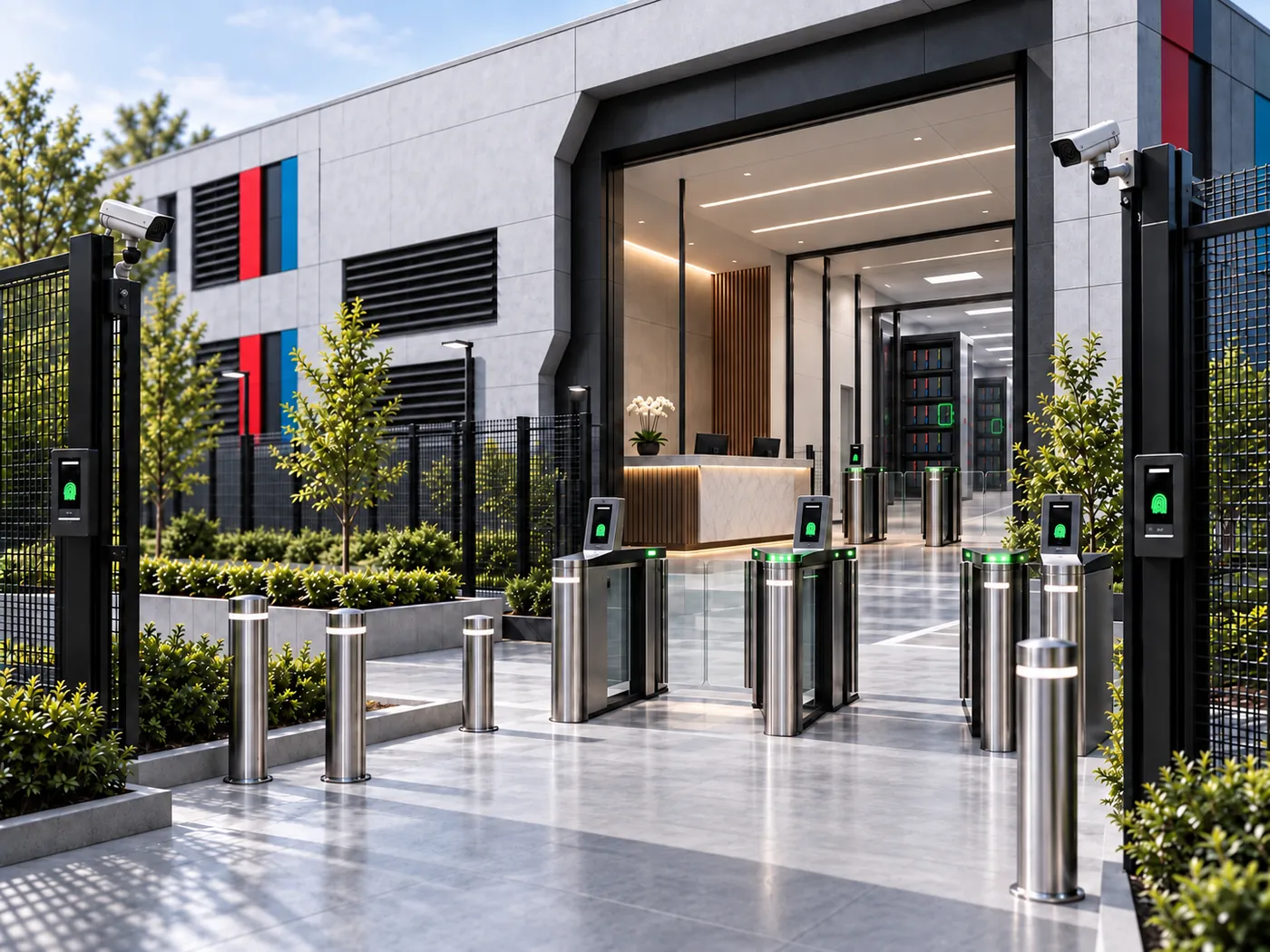
Walk through your blueprint with the Firevault team and scope a proof of concept on your estate. 30 minutes, no sales pitch.