


Challenge 1
Nation-state espionage.
State-sponsored actors target government networks for intelligence gathering, policy insight and citizen data.

Control for public sector
Public sector organisations manage citizen data, classified information and critical government services. Nation-state actors and criminal groups increasingly target government networks for espionage, disruption and data theft.
As featured in





The challenge
Government networks carry the data of an entire nation. A flat network turns one compromised mailbox into a citizen-data incident.
Government data held in secured Firevault Bunkers: Europe live, US and Middle East next.
Access to each government zone requires authorisation appropriate to the classification.
Automated compliance logging that can help support GovAssure, NCSC CAF and Cyber Essentials Plus.
Challenge 1
State-sponsored actors target government networks for intelligence gathering, policy insight and citizen data.

Challenge 2
Government databases contain sensitive data on millions of citizens, from tax records to health information.
Answered byRole-based zone accessChallenge 3
Decades-old government IT systems are increasingly connected to modern networks for digital transformation.

The scenario
Safeguarding records should not share a network path with the inbox. Step through it, or play it through.
Step 1 of 2
A local authority is hit by ransomware through a compromised email attachment, and the ransomware propagates across the flat corporate network.
Citizen-facing services are offline for three weeks, and social workers lose access to safeguarding case files for vulnerable children and adults.
Step 2 of 2
With Control, social services data sits on a physically separated network.
The network path from email to social services is not there, and verified control-plane baselines support restoration of citizen-facing services.
An illustrative scenario.
Where each module sits
Public sector networks carry a citizen-facing edge, a corporate estate, an identity tier, services and statutory records. Control puts a real boundary at every change of trust.
 P0 to P1 and supplier linkFirebreakA physical cut on the public and supplier boundaries.
 P0 to P1, P1 to P2 and P3 to P4 linksValidateRequests crossing into trusted estates are checked for origin, integrity and authority.
 P1 to P2 and P3 to P4 linksIsolateIdentity and records sit on their own physical fabrics.
 P2 to P3 linkLockService access ties to named users with the right role.
 P2 to P3 linkExecutePrivileged actions hold until the right approval is in place.
 P3 to P4 linkTransferWhen data has to move into the back office, Transfer governs how it crosses and where it lands.
 Supplier linkRelaySupplier access opens for the window of work and not a minute more.
 Supplier linkUnlinkWhen a supplier engagement ends, Unlink removes the persistent connection and the inherited trust.
Capabilities
Six things Control gives the team, from the first boundary to the audit afterwards.
Public sector
Government data held in secured Firevault Bunkers: Europe live, US and Middle East next.
Public sector
Access to each government zone requires authorisation appropriate to the classification.
Public sector
Automated compliance logging that can help support GovAssure, NCSC CAF and Cyber Essentials Plus.
Public sector
Out-of-band management via dedicated communications keeps governance capability independent of the production network.
Public sector
Every access to citizen data and government systems is recorded in tamper-evident logs.
Public sector
Verified baselines of government system configuration support restoration of citizen-facing services.
Adoption guide
Four steps, piloted on one site before it extends across the estate.
Map all network paths between citizen services, sensitive data systems, corporate IT and classified zones.
Design physically separated zones aligned to data classification and service criticality.
Deploy for the highest-risk systems first, typically safeguarding and social services data.
Phased deployment across all government systems, with verified configuration baselines.
Explore more
Questions
It can help support them: physical zone separation, role-based access and automated logging give evidence against GovAssure and NCSC CAF outcomes.
Talk to the team about your topology. Control sits on the paths between zones rather than inside connected systems.
Each service sits in its own zone, and access ties to named users with the right role. Crossings between zones are governed and logged.
Start with the highest-risk systems, typically safeguarding and social services data, and extend in phases.
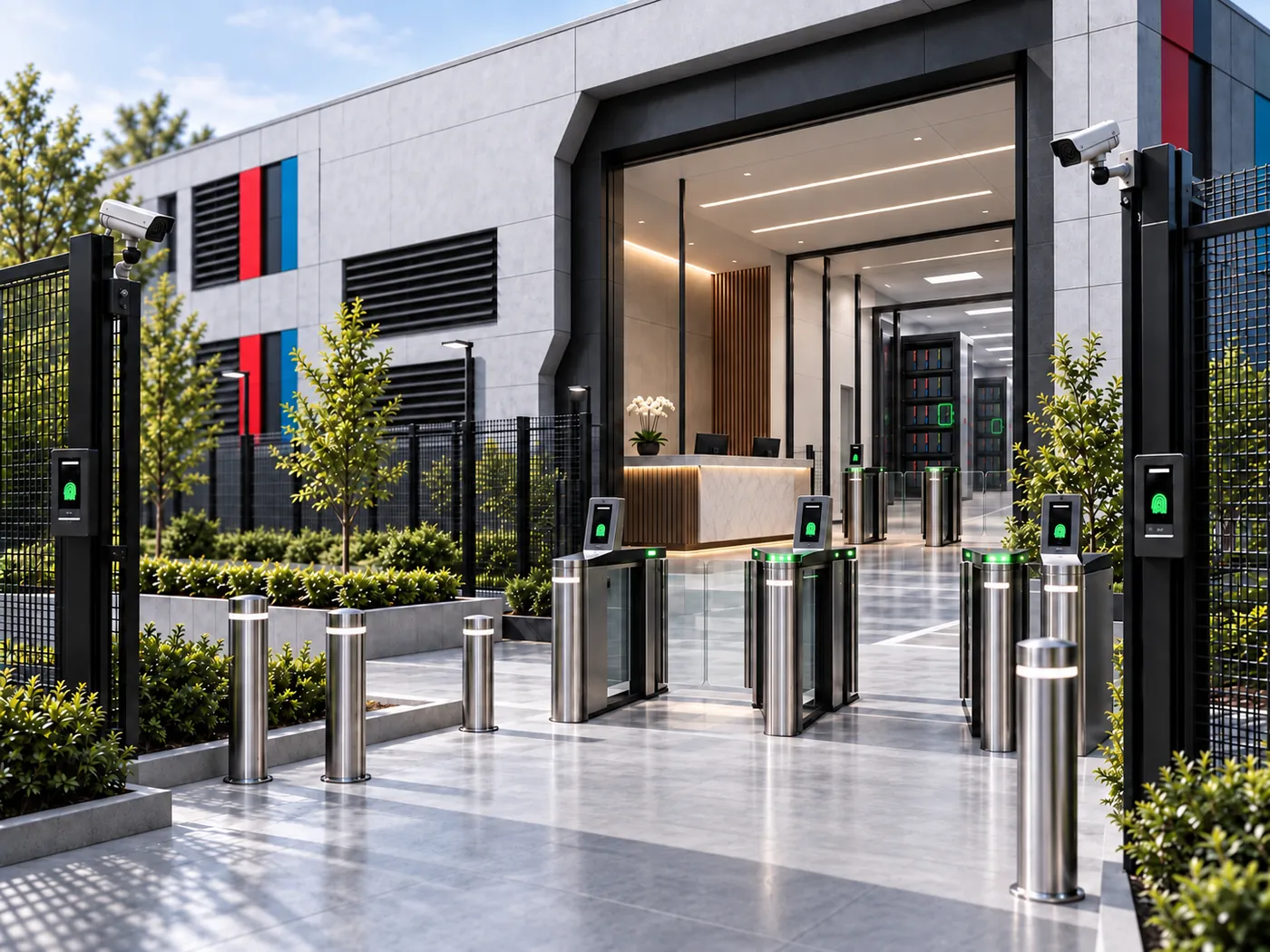
Walk through your blueprint with the Firevault team and scope a proof of concept on your estate. 30 minutes, no sales pitch.