


Challenge 1
POS compromise.
POS systems across many sites form a large attack surface for card data theft.


Control for retail
Retail networks span thousands of locations, each handling card payments through POS systems tied to corporate infrastructure. One compromised store can expose the whole estate.
As featured in





The challenge
When guest Wi-Fi and a payment terminal share a network, every customer browsing the internet is a potential path to payment card data.
Payment configurations held in secured Firevault Bunkers.
POS updates and configuration changes need sign-off from both IT operations and security.
Automated logging that can help support segmentation requirements across the estate.
Challenge 1
POS systems across many sites form a large attack surface for card data theft.

Challenge 2
Many stores run POS, back office, CCTV and guest Wi-Fi on one network, allowing lateral movement from any entry point.
Answered byMulti-party update controlChallenge 3
POS software vendors, payment processors and maintenance contractors each create persistent pathways into the payment environment.

The scenario
A malicious update can only exfiltrate data if the POS network has a path to the internet. Step through it, or play it through.
Step 1 of 2
Attackers tamper with a POS update server, and malware spreads to stores across the estate.
Over weeks, it steals card numbers through the shared store internet connection.
Step 2 of 2
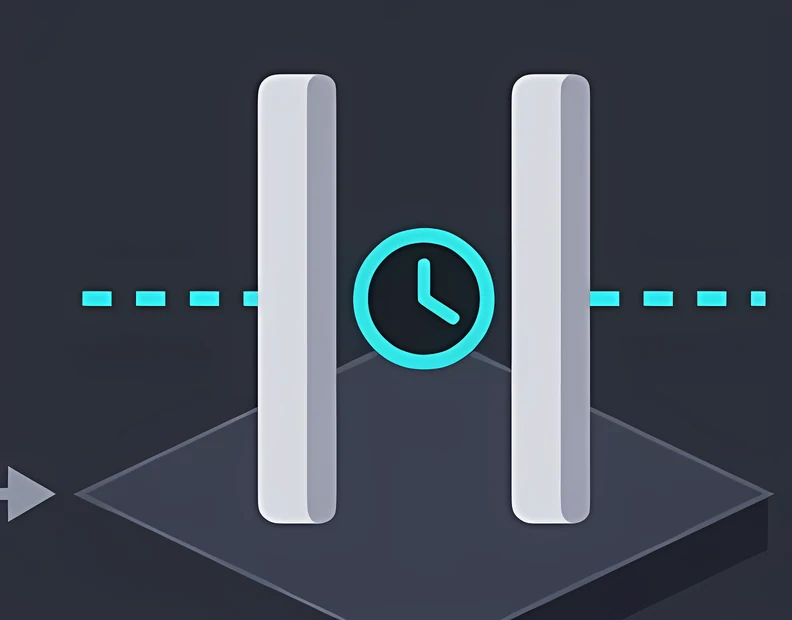
With Control, POS networks are separated from store internet access, so the malware has no route out.
Updates move through controlled, verified transfer windows.
An illustrative scenario.
Where each module sits
A retail estate carries an internet edge, a corporate office, stores, e-commerce and a cardholder data environment. Control puts a real boundary at every change of trust.
 Public and vendor boundariesFirebreakA physical cut that takes the live connection away during an incident.
 Internet to DMZ and corporate to e-commerceValidateChecks the origin and integrity of inbound traffic and cross-tier requests.
 DMZ to corporate, corporate to e-commerce, stores to paymentsIsolateEach zone sits on its own physical fabric.
 E-commerce to store and store to paymentsLockStore and payment access ties to named users with the right entitlements.
 Store to paymentsExecuteCross-system actions hold until approval is in place.
 E-commerce to store and vendor linkRelayStore and vendor paths open only for the duration of the work.
 Vendor linkUnlinkWhen a relationship ends, Unlink removes the persistent connection and the trust it carried.
Capabilities
Six things Control gives the team, from the first boundary to the audit afterwards.
Retail
Payment configurations held in secured Firevault Bunkers.
Retail
POS updates and configuration changes need sign-off from both IT operations and security.
Retail
Automated logging that can help support segmentation requirements across the estate.
Retail
Out-of-band management of store networks, independent of primary WAN links.
Retail
Every access, update and authorisation at every location, recorded in centralised, tamper-evident logs.
Retail
Verified POS configuration baselines support restoring a compromised store without relying on production systems.
Adoption guide
Four steps, piloted on one site before it extends across the estate.
Audit representative stores to find payment path exposure and segmentation gaps.
Design standard zones for POS, back office, CCTV and guest access, with Control modules at each boundary.
Roll out to a representative group of stores with payment isolation, controlled updates and compliance logging.
Phase the deployment across all locations with central management, verified baselines and continuous PCI DSS evidence.
Explore more
Questions
With a standard store zone design, deployed in phases and managed centrally, with out-of-band management for each store.
It can help support it: physical segmentation of the payment environment, logged automatically across the estate.
Yes. Payment traffic runs on its own path as it does today; what changes is that other store traffic cannot reach it.
Maintenance paths open for the duration of the work through Relay, with the right approval, and close again afterwards.
Walk through your blueprint with the Firevault team and scope a proof of concept on your estate. 30 minutes, no sales pitch.