

Challenge 1
IT/OT convergence.
Shared connectivity between IT and OT networks exposes industrial systems to IT-borne threats.

Control for OT environments
Industrial control systems, SCADA networks and manufacturing processes were built for reliability, not cybersecurity. As IT/OT convergence accelerates, these systems face threats they were never designed to withstand.
As featured in





The challenge
If your IT network can reach your OT network, so can an attacker. A firewall rule, a VLAN or a DMZ is software. Control enforces IT/OT separation at the hardware level.
Golden copies of PLC programs, SCADA configurations and HMI settings, held offline.
Process historian data protected in physically disconnected storage.
Time-bound access windows for firmware updates and configuration changes.
Challenge 1
Shared connectivity between IT and OT networks exposes industrial systems to IT-borne threats.

Challenge 2
Legacy OT systems lack authentication and encryption, and patching requires downtime.
Answered byHistorian backupChallenge 3
Attackers alter PLC programs and SCADA configurations with changes that go undetected for weeks.
The scenario
A firewall between IT and OT looked like an air gap. A firewall rule is software, and software can be bypassed. Step through it, or play it through.
Step 1 of 2
A manufacturing plant’s IT network is compromised through a phishing email targeting the finance team, and the ransomware spreads across the corporate network within four hours.
Because the historian server bridges IT and OT, the ransomware reaches the OT network by hour six. PLC configurations are encrypted, SCADA displays go dark, and recovery takes 18 days because backup PLC configurations were on a network share, also encrypted.
Step 2 of 2
With Control, the Isolate module physically disconnects OT backup data from IT networks, and the Transfer module governs any data movement between zones through policy-controlled windows.
The ransomware reaches IT, but the connection it would need to cross into OT is not there.
An illustrative scenario.
Where each module sits
Most OT estates still look like a stack: enterprise on top, an industrial DMZ in the middle, process control and supervisory layers below it, and safety at the bottom. Control puts a physical boundary at every step, so a problem at one layer does not propagate to the next.
 At every Purdue boundaryIsolateEach layer sits on its own physical fabric.
 L5 to L4 and L4 to L3.5 linksFirebreakA physical cut for the OT team on the IT boundary.
 Inside the L3.5 DMZRelayData moves from enterprise into OT through scheduled, defined routes.
 Inside the L3.5 DMZValidateBefore anything reaches process control, Validate checks its origin, integrity and authority.
 Inside the L3.5 DMZTransferWhen data has to move across the boundary, Transfer governs how it crosses and where it lands.
 L2 to L1 linkExecutePushing a change to a controller holds until the right approval is in place.
 L1 to SIS and SIS to L0 linksLockSafety is the last layer anything reaches.
Capabilities
Six things Control gives the team, from the first boundary to the audit afterwards.
OT
Golden copies of PLC programs, SCADA configurations and HMI settings, held offline.
OT
Process historian data protected in physically disconnected storage.
OT
Time-bound access windows for firmware updates and configuration changes.
OT
Automated compliance logging that can help support IEC 62443 zone and conduit requirements.
OT
Deploys alongside existing OT infrastructure, with no changes to PLCs.
OT
Every maintenance window, transfer and change is recorded.
Adoption guide
Four steps, piloted on one site before it extends across the estate.
Map all IT/OT boundaries, shared network paths, historian connections and remote access points.
Align Control modules to IEC 62443 security zones and conduits, designing physical separation.
Deploy alongside existing PLCs, SCADA systems and RTUs, without changes to operational equipment.
Activate controlled maintenance windows, historian backup replication and tamper-evident audit trails.
Explore more
Questions
Control modules align to IEC 62443 security zones and conduits: Isolate keeps each zone on its own fabric, and every crossing is governed and logged, which can help support the standard’s zone and conduit requirements.
Yes. It deploys alongside existing PLCs, SCADA systems and RTUs, without changes to operational equipment.
As time-bound access windows for firmware updates and configuration changes. Pushing a change to a controller holds until the right approval is in place.
Process historian data is replicated into physically disconnected storage, so a compromise of the IT side does not reach the backup.
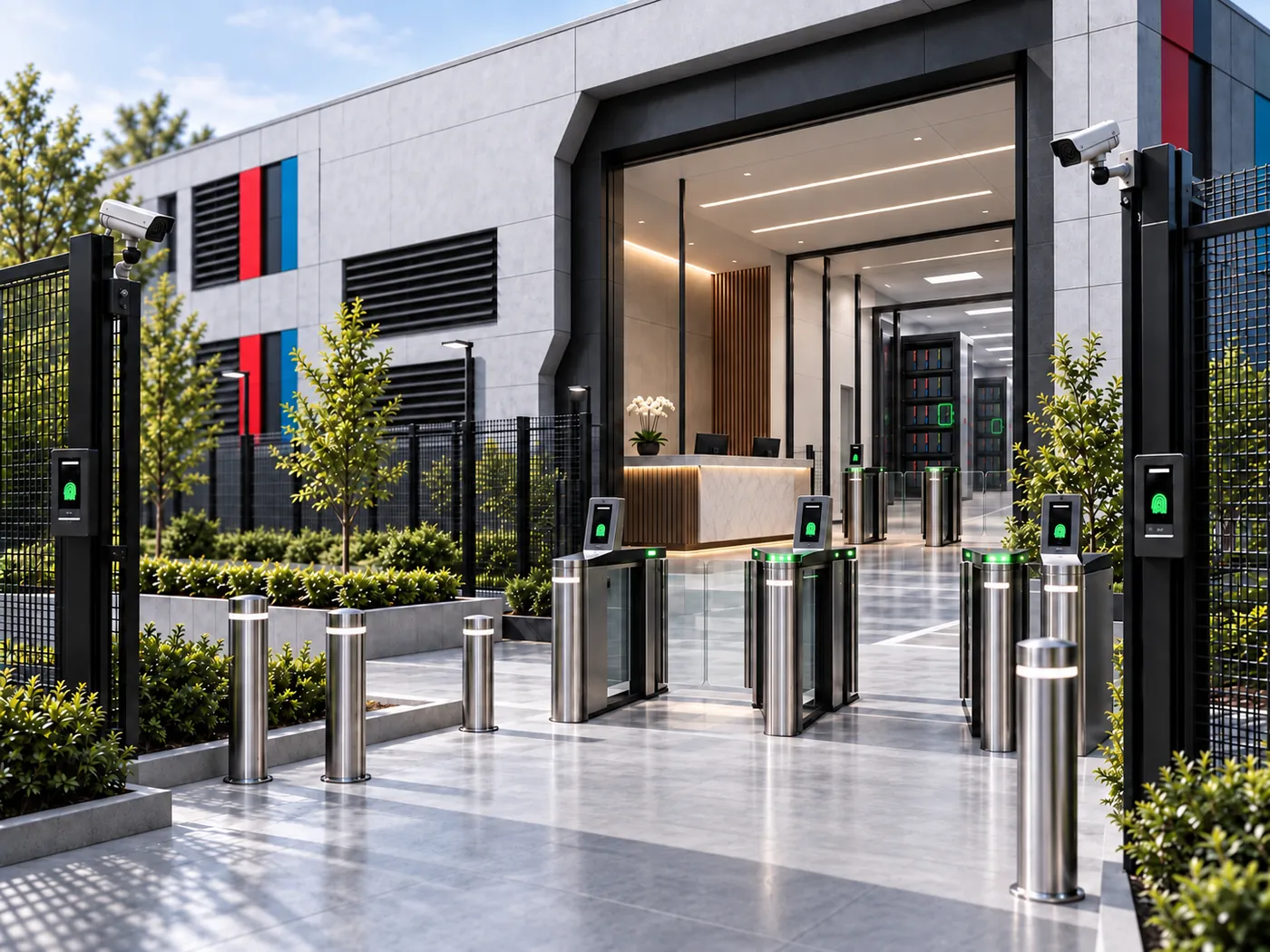
Walk through your blueprint with the Firevault team and scope a proof of concept on your estate. 30 minutes, no sales pitch.